
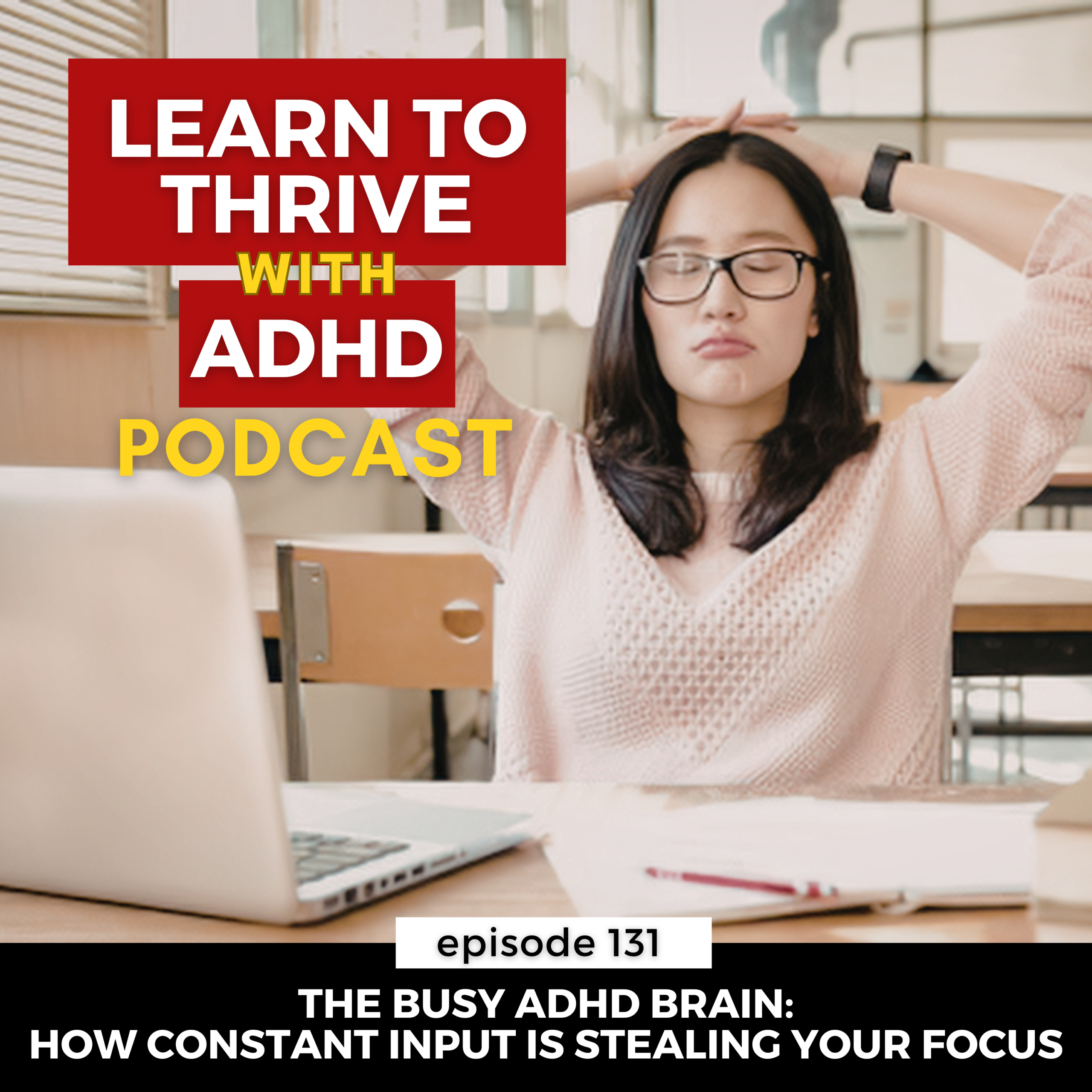



You’re not short on information. You’re buried in it. If you’re a professional or entrepreneur with ADHD, you probably answer messages, check email, and take in content all day long. And it’s all useful, which is exactly what makes ADHD focus overload so easy to miss. In this episode, Coach Mande John makes the case that your brain isn’t refusing to focus. Instead, it may simply be too full to think clearly.
Busy Isn’t the Same as Effective
You can answer messages, solve small problems, and check things off all day long. That’s activity. But it doesn’t always mean you’re making progress on the work that matters most. Small tasks give you a quick win, so your attention naturally reaches for them first. Meanwhile, the harder work — the project, the decision, the conversation you’ve been avoiding — requires deeper thought and doesn’t offer the same instant payoff. So it keeps getting pushed aside, even though you worked all day.
The Stress Stimulation Loop
Mande introduces a pattern she calls the stress stimulation loop. You feel stressed, so you reach for stimulation: a message, a tab, a quick task. That stimulation gives you short-term relief, but it also makes it harder to settle back into the work that created the stress in the first place. Over time, this loop leaves your brain more crowded, not less.
Instead of only asking “why do I keep checking my phone,” Mande suggests a better question: what was I feeling right before I reached for it? Often, the phone isn’t the original problem. It’s the escape route your brain has learned to use whenever something feels uncomfortable.
Purposeful, Reactive, and Avoidant Input
Not all input is equal, and this episode breaks it into three categories. Purposeful input means you know what you’re looking for and what you’ll do with it. Reactive input shows up and changes what you’re doing without your choosing it. Avoidant input is trickier: you keep looking for more information because acting on what you already know feels harder.
That third category can be hard to catch, because research and planning both feel productive. Often, though, you’re not actually looking for clarity. You’re looking for certainty — and most meaningful work doesn’t offer certainty upfront. Clarity comes after you start.
Why Quiet Moments Matter
Many of us fill every quiet moment: driving, waiting, eating. But an ADHD brain needs unfilled time to sort through everything it’s already taken in. That’s often when you finally remember the thing you forgot, or notice the connection you missed. This doesn’t mean silence all day. It means choosing a little space on purpose, rather than filling every open moment automatically.
Building a Small Attention Reset
Rather than a full digital detox, Mande recommends a few small, sustainable changes:
- Protect one block of time. Twenty to thirty minutes with no email, messages, or background input, focused on one task. If competing sounds and input feel overwhelming, see ADHD sensory overload.
- Give technology a job before you open it. Decide what you’re doing on the platform before you open it, instead of deciding while information is already coming at you.
- Choose one input-free part of your day. A drive, a walk, or the first few minutes of lunch, left quiet on purpose.
- Create a place for stray ideas. A “not now” list or parking lot keeps a thought safe without requiring immediate action.
- Notice the urge before you act on it. When you reach for stimulation, pause and ask what happened right before that urge showed up.
At the end of the week, Mande recommends reviewing what worked, revising what didn’t, and recommitting to the boundaries that actually helped.
The Bottom Line
Your attention is part of the infrastructure of your business, your career, and your life. The goal isn’t to use less technology just to say you use less. It’s to create enough space for your brain to decide what matters, and stay with it long enough to move forward.
Listen to the full episode for Mande’s complete breakdown of the attention reset and how to start using it this week.
Enjoyed this episode? Grab more free ADHD tools and resources at learntothrivewithadhd.com.
Ready for more personalized support? Book a free call with Coach Mande John to talk about private 1:1 ADHD coaching.
Watch the video on Youtube or Listen to the Episode