
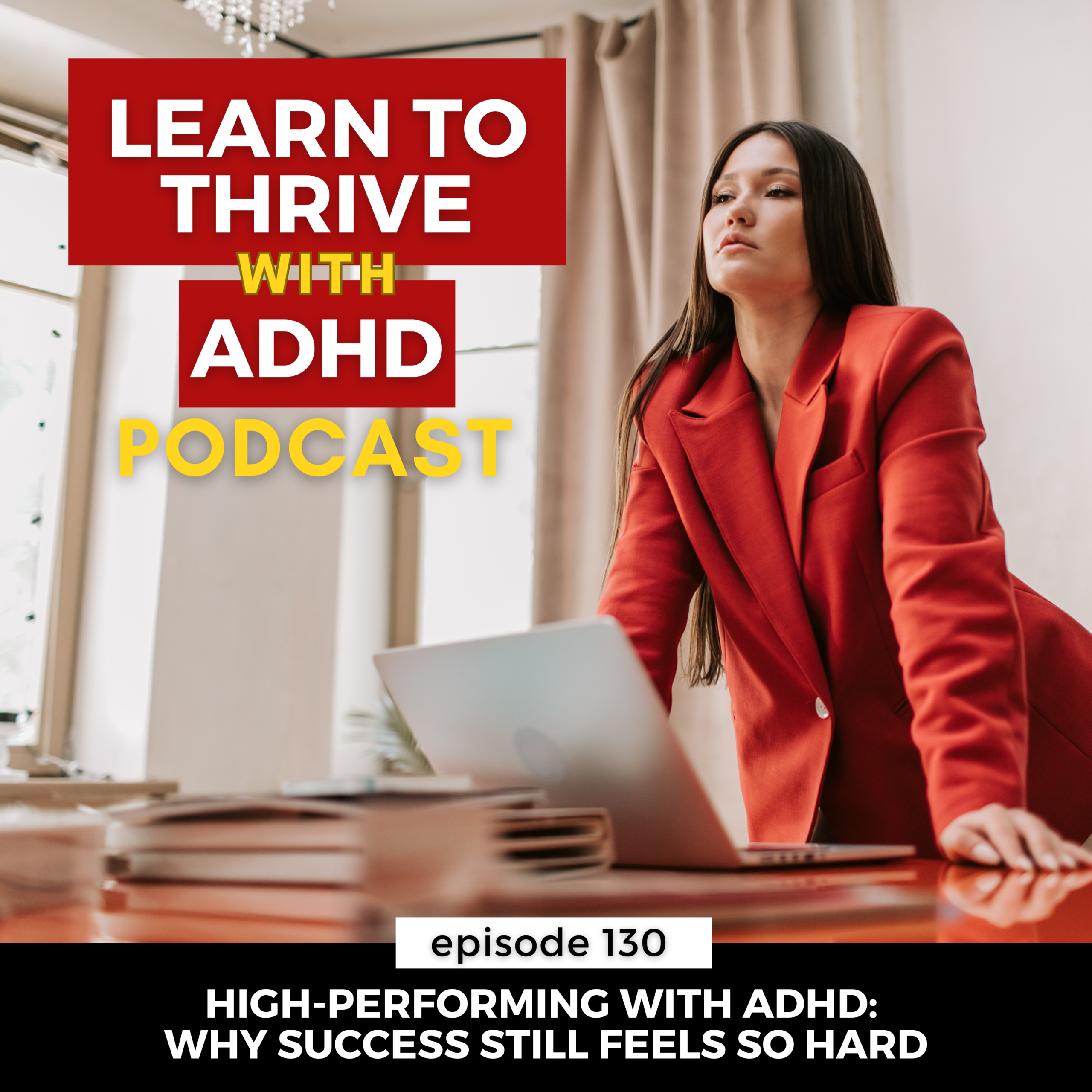



Can you handle a massive project with a million moving parts? Can you run a business, lead a team, and solve problems that would overwhelm most people? Then why can one simple email sit unanswered for three weeks? In this episode, Coach Mande John talks directly to the high performers, especially the ones who don’t feel like one. She unpacks high performance and ADHD, and why so many successful ADHD adults create results through pressure instead of a system they can actually sustain.
You Might Already Be a High Performer
First, consider this: you may already be performing at a high level. You just might not feel like it. Many ADHD adults judge themselves by the email they forgot, the routine they couldn’t maintain, or the task they’ve been avoiding for two weeks. But those moments don’t prove you’re incapable. Instead, they prove that certain parts of your performance aren’t supported well enough. That’s a very different problem.
High performance doesn’t mean you’re naturally organized, calm, or disciplined all the time. It’s not a personality type, and it’s not something only a few people are born with. Instead, it’s a way of working that anyone can learn, practice, and support.
When Pressure Becomes Your Performance System
There’s a concept called Rising to Necessity: we tend to perform better when something feels important, urgent, or high-stakes. That can genuinely help. But problems start when necessity turns into an emergency, and every task needs a crisis before it gets your attention.
At that point, pressure stops supporting your performance. Instead, it becomes your performance system. You avoid a project, worry about it, then go into overdrive once the deadline closes in. You get it done, but you’re depleted afterward, and something else quietly falls behind. Then the cycle starts again.
Busy Isn’t the Same as Effective
A lot of high-performing ADHD adults stay busy all day, answering messages and jumping between responsibilities. Still, they end the day feeling like the most important thing never moved. That’s because small tasks often give a quick dopamine hit, while the work that matters most stays quiet, unfinished, and easy to push aside.
Stephen Covey’s classic distinction applies directly here: urgent work demands attention right now, while important work improves your life or business over time. Since important work rarely comes with the same built-in pressure, it can sit untouched until it becomes urgent, too, and the crisis cycle starts over.
The Three Levels of Clarity
A vague goal creates resistance, no matter how much you care about it. So Mande breaks clarity down into three levels: first, what result are you trying to create? Second, what’s the current priority inside that result? And third, what’s the next actual action you can take?
“Grow my business” isn’t a step. Neither is “market more.” But “write the first paragraph of a landing page” is something your brain can actually start. The clearer the action, the less resistance you’ll face.
Clarity, Avoidance, or Depletion?
When you get stuck, it helps to ask three separate questions: Am I unclear about what to do? Am I avoiding an uncomfortable feeling? Or am I simply out of energy? Each answer points to a different solution — clarity, emotional processing, or rest. Since a depleted brain can’t perform like a rested one, recovery isn’t separate from performance. It’s part of it.
Build on Strengths, Not Just Weaknesses
Many high performers with ADHD spend too much energy trying to fix every weak spot. But sustainable performance doesn’t come from being equally good at everything. Instead, it comes from knowing your strengths and using them on purpose, while building enough structure and support around the rest. Delegating isn’t cheating — it’s good performance.
Rebuilding Self-Trust With the Three R’s
Finally, Mande revisits the Three R’s — Review, Revise, Recommit — as the tool for coming back after a setback. Review what actually happened, without shame. Revise the plan based on what you learned. Then recommit, not to the same approach, but to the adjusted one. Every time you restart this way, you build evidence that you can trust yourself, not because you never get off track, but because you know how to come back.
Listen to the full episode for Mande’s complete breakdown of what sustainable high performance looks like with an ADHD brain.
Enjoyed this episode? Grab more free ADHD tools and resources at learntothrivewithadhd.com.
Ready for more personalized support? Book a free call with Coach Mande John to talk about private 1:1 ADHD coaching.
Watch the video on Youtube or Listen to the Episode