
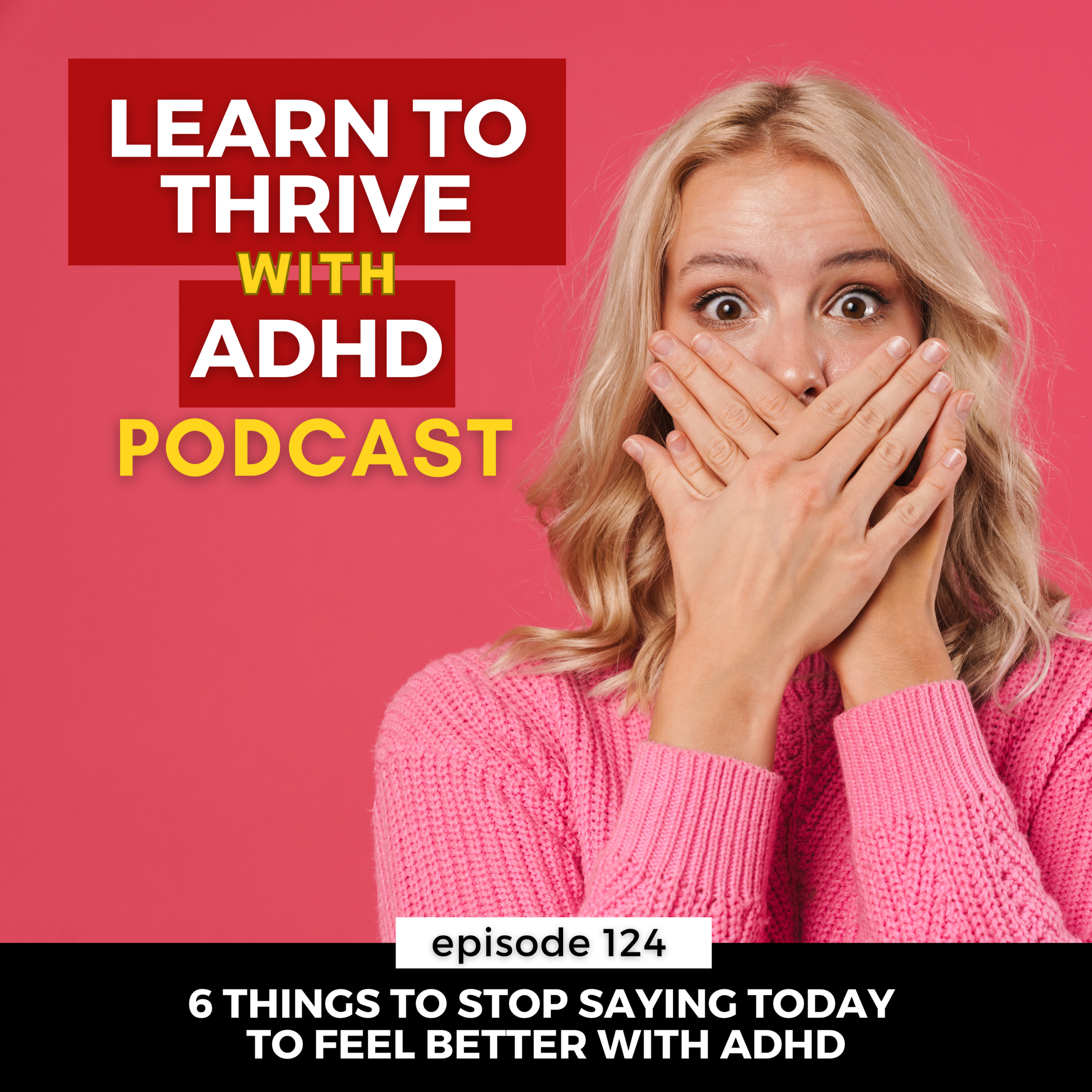



ADHD language reset starts with something deceptively simple: the words you use every day. In this episode of Learn to Thrive with ADHD, Coach Mande John breaks down six common words and phrases that are quietly reinforcing shame, overwhelm, and limitation — and shares exactly what to replace them with instead.
If you’ve ever felt like your own brain is working against you, this episode is going to feel like a relief.
What Is the ADHD Language Reset?
The ADHD language reset is the practice of noticing the everyday words that keep your brain stuck — and replacing them with language that creates more possibility, more grace, and less pressure.
ADHD brains are already wired to find what’s unfinished, what’s missing, and what’s wrong. The last thing we need is our own language reinforcing that pattern.
The 6 Words to Replace (And What to Say Instead)
1. “Should” → “Can”
“Should” is one of the biggest sources of shame in the ADHD language reset conversation. It keeps us measuring ourselves against standards we often didn’t even choose.
Try instead: Can. “I can go for a walk.” “I can spend ten minutes on this.” Can reminds you that you have choices.
2. “Have To” → “Get To”
When everything feels like an obligation, resistance follows. Swapping “have to” for “get to” is one of the most powerful ADHD language resets because it shifts your perspective from pressure to privilege.
Try instead: I get to work out. I get to run my business. It doesn’t mean every task is enjoyable — it means you’re choosing to see the opportunity underneath it.
3. “Busy” → Something More Intentional
The more you say you’re busy, the busier you feel. Busy can quietly become an identity instead of a temporary circumstance — and for ADHD brains, that’s a dangerous pattern.
Try instead: “I have time for what matters.” “I’m choosing how I spend my time.” These reframes put you back in the driver’s seat.
4. “Can’t” → “Can’t Yet”
“Can’t” closes the door. One tiny word changes everything: yet. It acknowledges that something is hard right now without deciding it will always be impossible.
Try instead: “I can’t do it yet.” “I’m still learning.” “I’m working on it.”
5. “I Don’t Know” → “I’m Figuring That Out”
“I don’t know” can shut down curiosity before it even starts. It ends the internal conversation instead of opening it up.
Try instead: “I’m learning.” “I haven’t figured that out yet.” “Let me think about that.” These keep you curious instead of stuck.
6. “I Am” → “I Feel” or “I Am… And”
The words that follow “I am” carry enormous weight. When you say “I am anxious” or “I am disorganized,” your brain starts treating those things as permanent facts.
Try instead: “I feel anxious right now.” “I am overwhelmed, and sometimes I’m calm.” Adding “and” creates space. No feeling gets to define you completely.
The Habit That Makes It Work
You’re going to catch yourself using these words. That’s normal — these are deeply ingrained habits.
The key is simple: the catch is the win.
When you notice it, pause. Correct it. Move on. No shame, no spiral. Just awareness and a gentle redirect.
Don’t try to change all six at once. Pick one this week. Notice it. Practice the replacement. That’s how language habits shift — and that’s how your ADHD brain starts getting a different kind of evidence about who you are.
Free Resource: The ADHD Language Reset Guide
Grab the free downloadable guide with all 6 words, why each one works against your ADHD brain, and exactly what to say instead.
👉 Download the free guide here
Listen on your favorite podcast platform or watch on YouTube.
Download the free thought loops infographic: www.learntothrivewithadhd.com/thoughtloops
Subscribe to the weekly newsletter: www.learntothrivewithadhd.com/weekly
Work with Mande: www.learntothrivewithadhd.com/services
Watch the video on Youtube or Listen to the Episode